


Eseigbe Takes Need Assessment Summit to Amahor, Ugun; Communities Demand Roads, Water, Electricity, Jobs
The ongoing grassroots need assessment and community engagement initiative of the All Progressives Congress (APC) candidate for Esan Central, Esan West and Igueben Federal Constituency, Sir Lucky Eseigbe, Esq., has continued to attract strong community participation, with the team extending its engagement to Ward 8, comprising Amahor and Ugun communities in Igueben Local Government Area of Edo State.
The latest leg of the exercise provided another opportunity for residents, traditional rulers, community leaders and stakeholders to openly articulate their development priorities and engage directly with the House of Representatives candidate and members of his team.
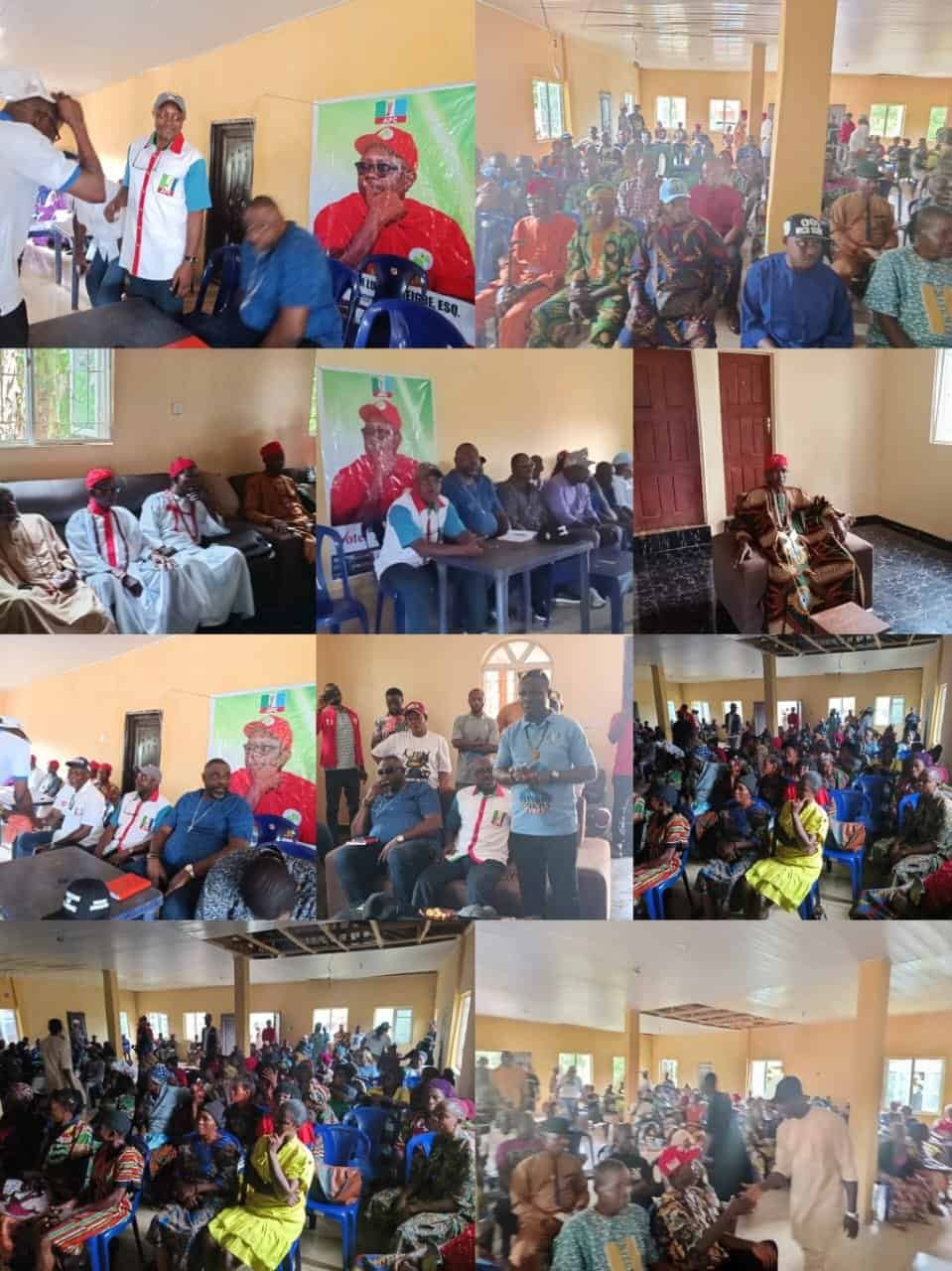
Eseigbe, who arrived in Amahor alongside other candidates and members of his campaign team, first paid a courtesy visit to the palace of the Onojie of Amahor, His Royal Highness Ehigie Enadaghe, JP, where he formally informed the traditional ruler and his chiefs of the purpose of the visit.
Addressing the Onojie and the chiefs, Eseigbe explained that the exercise was primarily designed to listen to the people, identify their most pressing needs and establish a clear understanding of the priorities requiring attention across Amahor and Ugun.
He stressed that meaningful representation must begin with listening to the people, noting that the need assessment was intended to provide a practical platform through which the concerns of the communities could be properly documented and channelled to the relevant authorities.
Eseigbe specifically identified the Amahor-Ugun road as one of the major challenges confronting the communities, alongside access to water and other basic infrastructure.
He assured the people that the Amahor-Ugun road would receive the attention it deserves, adding that the essence of the engagement was to understand the challenges from the perspective of the people who live with them daily.
Making a strong case for a non-partisan approach to community development, Eseigbe told the gathering that the engagement was not merely a political gathering, stressing that development should benefit everyone irrespective of political affiliation.
According to him, once a road is constructed or rehabilitated, every resident and visitor would use it regardless of political party.
He further explained that the outcome of the need assessment would not be limited to his own office or political structure, but would be presented to relevant stakeholders, including the Governor, Senator, House of Representatives member, Local Government Chairman, House of Assembly member and councillor representing the ward.
Eseigbe also acknowledged the importance of the traditional institution in grassroots development, explaining that he could not meaningfully engage the people of Amahor and Ugun without first paying respect to the palace.
He apologised to the Onojie and the chiefs for arriving later than scheduled, describing the delay as an oversight on his part.
He commended the monarch for his patience and understanding, assuring him that the gesture would not be taken for granted.
While noting that the Amahor road remains a major concern already known to him, Eseigbe said the visit was also about familiarising himself with the palace, traditional institution and people of the community, while seeking the prayers and support of the traditional ruler.
Responding, the Onojie of Amahor warmly welcomed Eseigbe, his team and the other candidates to the palace and the community.
The monarch highlighted the deplorable condition of the Amahor-Ugun road as one of the most urgent challenges requiring attention. He also drew attention to the need for improved access to water and electricity, among other development concerns.
Supporting the monarch’s appeal, the Obaruyi of Amahor Kingdom, Chief Monday Mayo, appealed to Eseigbe and the other candidates present to ensure that the promises made to the people translated into tangible action.
Chief Mayo expressed confidence in Eseigbe and declared his support for the initiative, while urging the candidate to remain committed to the development needs presented by the people.
Similarly, the Osekpor of Amahor Kingdom, Chief Stephen Ozogbe, added his voice to the call for development, urging Eseigbe not to follow the pattern of leaders who make promises and fail to fulfil them.
He assured the visiting team of the support of the people of Amahor and Ugun while appealing for sustained attention to the communities.
The engagement at the palace climaxed with heartfelt prayers from the Onojie for Eseigbe, his team and the success of their efforts.
From the palace, Eseigbe and his team proceeded to the Amahor town centre, where they met with residents of Amahor and Ugun for a wider interactive session.
At the community engagement, residents spoke extensively about their development challenges and expectations, with roads, education, employment, youth empowerment and improved government presence featuring prominently among the issues raised.
Speaking on behalf of the community, Elder Monday Oboh described the initiative as unusual in its approach, saying he could not recall a candidate previously coming before the people with an invitation to reason together without allowing political affiliation to dominate the discussion.
He commended Eseigbe for undertaking the need assessment and interactive engagement, describing it as an opportunity for the people to directly present their concerns.
Elder Oboh also assured the visiting team of the support of Ugun while appealing for greater attention to youth employment and empowerment opportunities.
Other speakers echoed similar concerns, calling for increased government attention to Amahor and Ugun and urging the visiting team to ensure that the issues raised during the engagement were properly documented and pursued.
Responding to the concerns, Eseigbe thanked the people for their openness and willingness to articulate their challenges.
He assured the residents that the issues raised would be carefully considered, stressing that the engagement was designed precisely to enable him and his team understand the realities confronting the people at the grassroots.
The candidate said the areas of concern raised by the communities—from youth and women engagement to infrastructure, roads and other basic needs—would form part of the issues requiring sustained attention.
He urged the people to continue to engage with the team and expressed confidence that the exercise would provide a clearer roadmap for addressing the development priorities of the communities.
The Amahor-Ugun engagement further reinforced the central message of the ongoing need assessment exercise: that effective representation begins with listening to the people, understanding their realities and documenting their priorities before seeking solutions.
For Eseigbe and his team, the consultation continues as the grassroots engagement moves across communities within the federal constituency.
Eseigbe’s public campaign platform similarly identifies community development, education, infrastructure, youth empowerment and improved access to essential services among the areas of focus of his political agenda.